

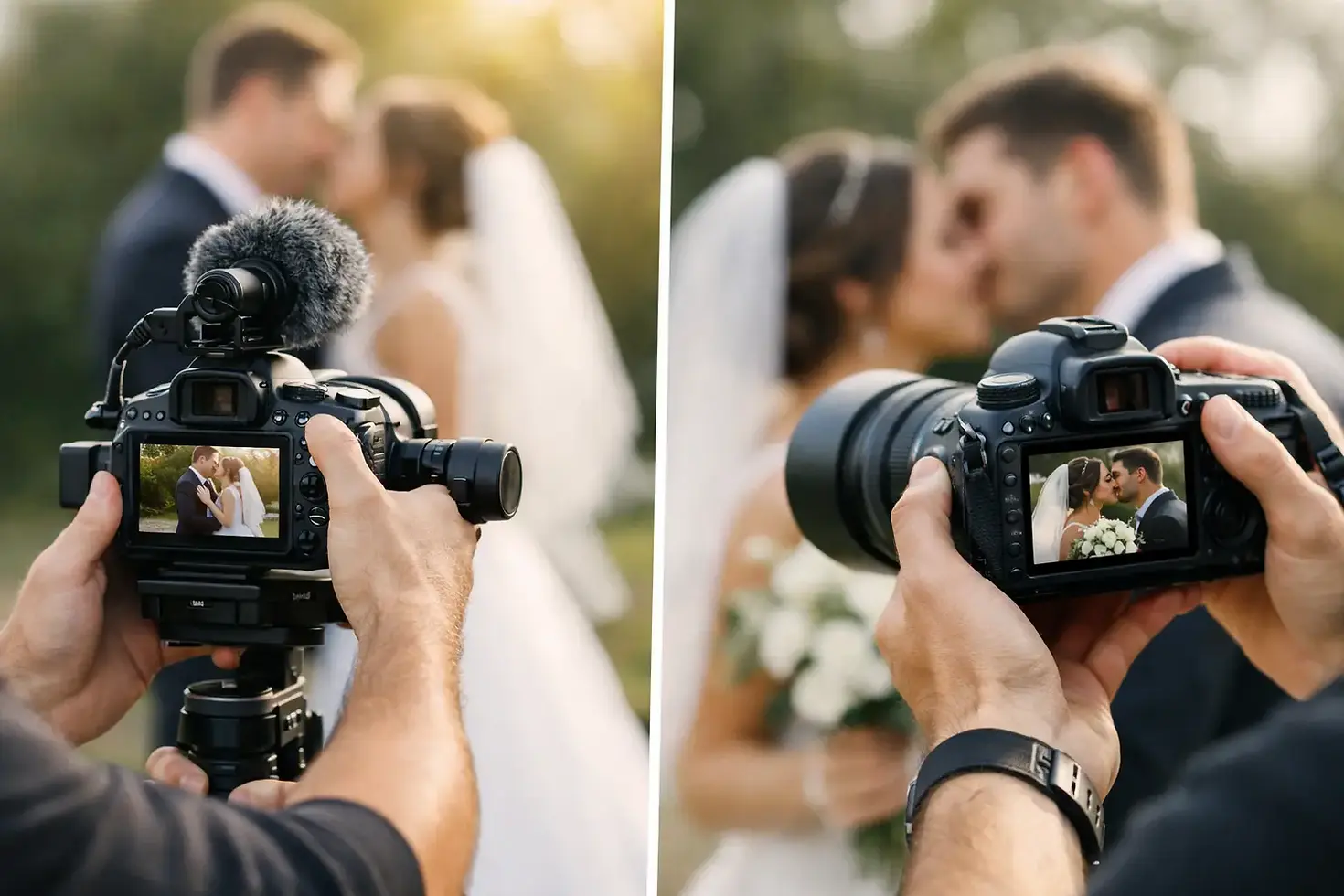
Wedding Video vs Photography: What Matters Most?
- HG Photo Films
- Jul 5
- 6 min read

A wedding day moves fast. One minute you are buttoning a sleeve or smoothing a veil, and the next you are halfway through your first dance wondering how the night is already flying by. That is why the question of wedding video vs photography matters so much. You are not just choosing a service. You are deciding how your memories will live after the day is over.
For some couples, still images are everything. For others, hearing vows again or watching parents react during the ceremony feels just as essential. Most couples are not really asking which medium is better. They are asking which one will let them feel their day again in the most honest, beautiful way.
Wedding video vs photography: the real difference
Photography freezes a moment. It gives you the frame you will hang on the wall, save to your phone, and return to for years. A great wedding image can hold emotion in a single glance - the way your partner looks at you at the altar, your grandmother’s hands during the blessing, the chaos and joy of the dance floor at just the right second.
Videography captures movement, sound, and rhythm. It preserves your voices, the pace of the ceremony, the laughter between formal moments, and the energy that still photos cannot fully replay. Film gives you atmosphere. Photography gives you icons.
Neither one replaces the other because they do different emotional jobs. A photograph can become part of your daily life in a very immediate way. A film can bring you back into the experience when you want to revisit the feeling of the day as it unfolded.
What photography does best
Wedding photography is often the foundation because it creates the images people use and share most often. Your gallery becomes part of your home and your family history. These are the portraits printed in albums, framed on nightstands, sent to relatives, and revisited on anniversaries.
There is also something powerful about the stillness of a photograph. It allows a moment to breathe. You can study expressions, styling, design details, and subtle interactions without distraction. If you care deeply about timeless portraits, editorial beauty, or documentary candids that feel artful and polished, photography carries that weight especially well.
Photography is also practical in a way couples appreciate after the wedding. It is fast to reference, easy to share, and simple to display. You do not need to set aside time to watch it. You can experience it in seconds and still feel the impact.
That said, photography has limits. It cannot preserve the tremble in your voice during vows, the exact cadence of a speech, or the swell of applause after your first kiss. It tells the story through selected moments, not continuous motion.
What videography does best
Wedding videography is about emotional replay. It lets you hear your partner’s voice crack during private vows, watch your parents walking into the reception, and relive the movement of your dress, the music, and the room itself. These are things still images can suggest, but not fully reproduce.
A well-crafted wedding film also brings structure to the story. It can show how the day built from anticipation to ceremony to celebration, tying together details and reactions in a way that feels immersive. If your wedding includes meaningful speeches, cultural traditions, live music, or family members traveling in for the occasion, video often becomes more valuable with time.
There is another reason couples choose film. Some moments are simply better in motion. The way your partner reaches for your hand. The burst of laughter after a flower girl goes off-script. The sound of everyone cheering as you enter your reception. Those memories often hit differently when they are seen and heard.
The trade-off is that videography is less instantly present in daily life. Most couples will not watch their full film as often as they scroll through their photos. Video is an experience you return to with intention, while photography tends to stay visible all the time.
If you have to choose one
This is where personality, priorities, and budget matter more than trends.
If you value printed keepsakes, want images for your home, and care most about portraits and candid moments you can revisit every day, photography is usually the stronger single investment. It is the most versatile format and often the one couples interact with most after the wedding.
If your day includes highly personal vows, emotional speeches, or once-in-a-lifetime family presence that you want to hear and see again, videography may matter more than you expected. Couples who are deeply moved by sound, movement, and atmosphere often connect more strongly with film.
There is also a practical lens to this decision. A smaller celebration with fewer moving parts may feel fully preserved through strong photography alone. A large, emotional, high-energy wedding often benefits from video because so much is happening at once.
The right answer is not about what other couples do. It is about how you naturally remember things. Some people remember life in images. Others remember voices, motion, and feeling.
When both make the most sense
For many couples, the honest answer in the wedding video vs photography conversation is both. Not because it is excessive, but because each medium protects something the other cannot.
Together, they create a fuller memory. Photography gives you the refined portraits, candid storytelling, and visual legacy you will live with. Videography gives you the emotional texture - the movement, audio, and atmosphere that bring the day back to life.
There is also a creative advantage when both services are approached as one cohesive story. When photo and film teams work with the same sensibility, the final result feels intentional rather than fragmented. The style, pacing, and emotional focus align. That matters more than many couples realize, especially if you want your gallery and film to feel like they belong to the same world.
For brands like HG Photo Films, that dual perspective is part of the value. The goal is not simply to document events from two different angles. It is to shape one honest, visually refined narrative across stills and motion.
Budget, priorities, and a smarter way to decide
Budget is real, and it should be approached without guilt. Choosing where to invest does not mean you care less. It means you are being clear about what will matter most to you later.
A helpful question is this: five years from now, what do you imagine yourself reaching for first? If the answer is an album on your coffee table, prioritize photography. If the answer is replaying your vows on an anniversary, prioritize videography.
Another good question is what parts of your wedding are most meaningful to you. If design, fashion, and portraiture are central to your vision, photography deserves heavy weight. If your ceremony words, toasts, and family interactions are the emotional core, video may carry more value.
You can also think in terms of coverage depth instead of all or nothing. Some couples book comprehensive photography and shorter video coverage. Others choose a full film package and a more focused photo collection. The right fit does not always mean matching packages evenly.
Common regrets couples mention later
Couples rarely regret preserving too much meaning. They are more likely to regret assuming they would remember everything without help.
Some wish they had more photographs with specific family members. Others realize too late that they do not remember the sound of the speeches or the pace of the ceremony. The most common regret is not that one medium failed them. It is that they underestimated how different each medium feels afterward.
This is especially true for couples planning a wedding from a deeply emotional place. If your day is about more than the visuals - if it is about family history, personal vows, cultural moments, and the energy of everyone gathered in one room - then choosing based only on price can leave part of the story missing.
Wedding video vs photography is really about memory
This choice is less about media and more about memory style. Photography gives you permanence in a frame. Videography gives you presence in motion. One helps you hold a moment. The other helps you step back into it.
If you are deciding between them, give yourself permission to think beyond the wedding day itself. Think about the quiet years after. Think about what you will want when life has changed, when loved ones are older, and when the details of the day have softened around the edges. The best choice is the one that still feels meaningful long after the flowers are gone.


Comments